


Uncategorised (111)
A Free, Open Resource for the Global Research Community

In response to the COVID-19 pandemic, the Allen Institute for AI has partnered with leading research groups to prepare and distribute the COVID-19 Open Research Dataset (CORD-19), a free resource of over 47,000 scholarly articles, including over 36,000 with full text, about COVID-19 and the coronavirus family of viruses for use by the global research community.
This dataset is intended to mobilize researchers to apply recent advances in natural language processing to generate new insights in support of the fight against this infectious disease. The corpus will be updated weekly as new research is published in peer-reviewed publications and archival services like bioRxiv, medRxiv, and others.
CORD-19 Explorer is a quick and easy way to search the CORD-19 corpus,Or, you can download the complete data below.

1.https://pages.semanticscholar.org/coronavirus-research
2. https://cord-19.apps.allenai.org/

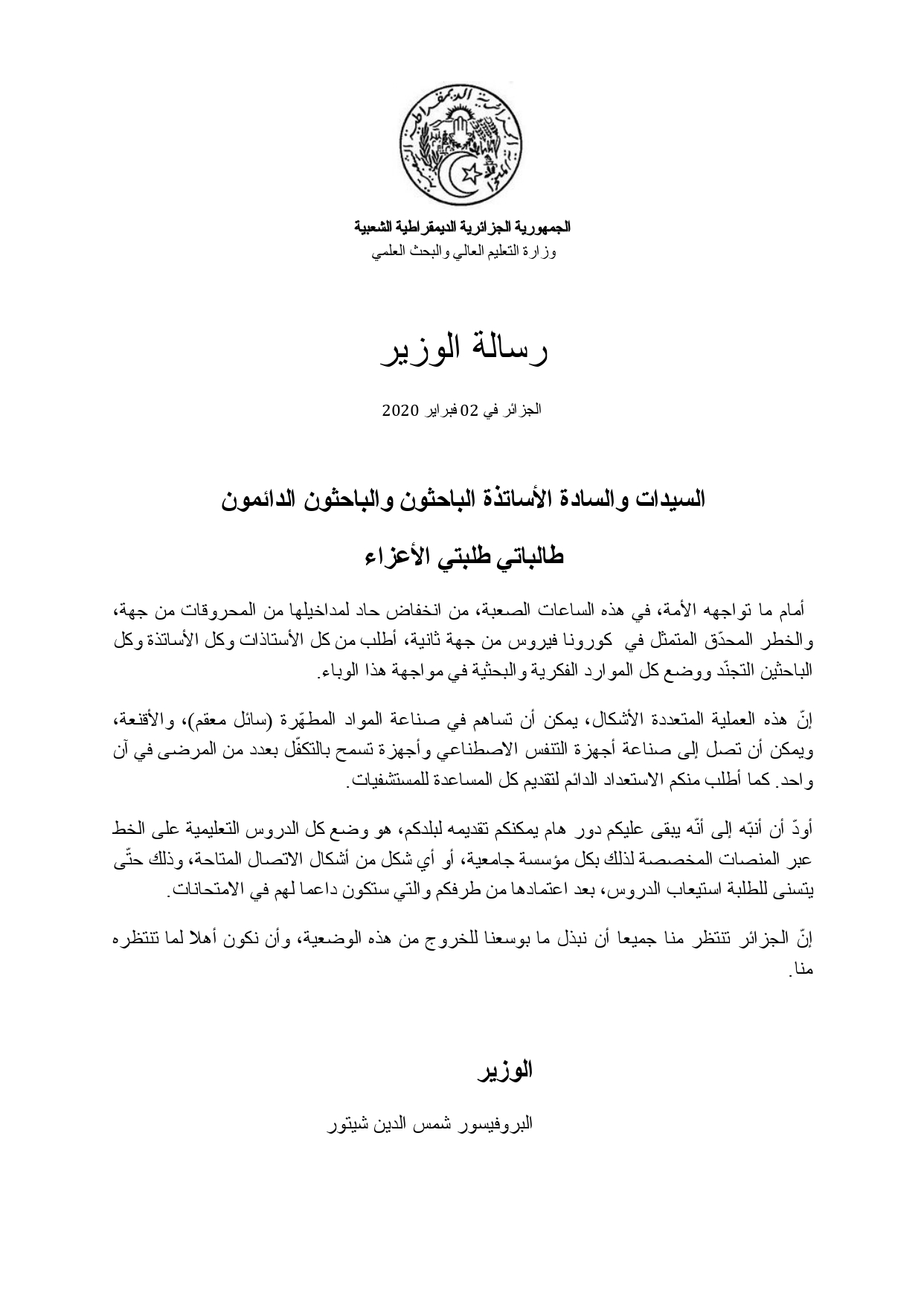
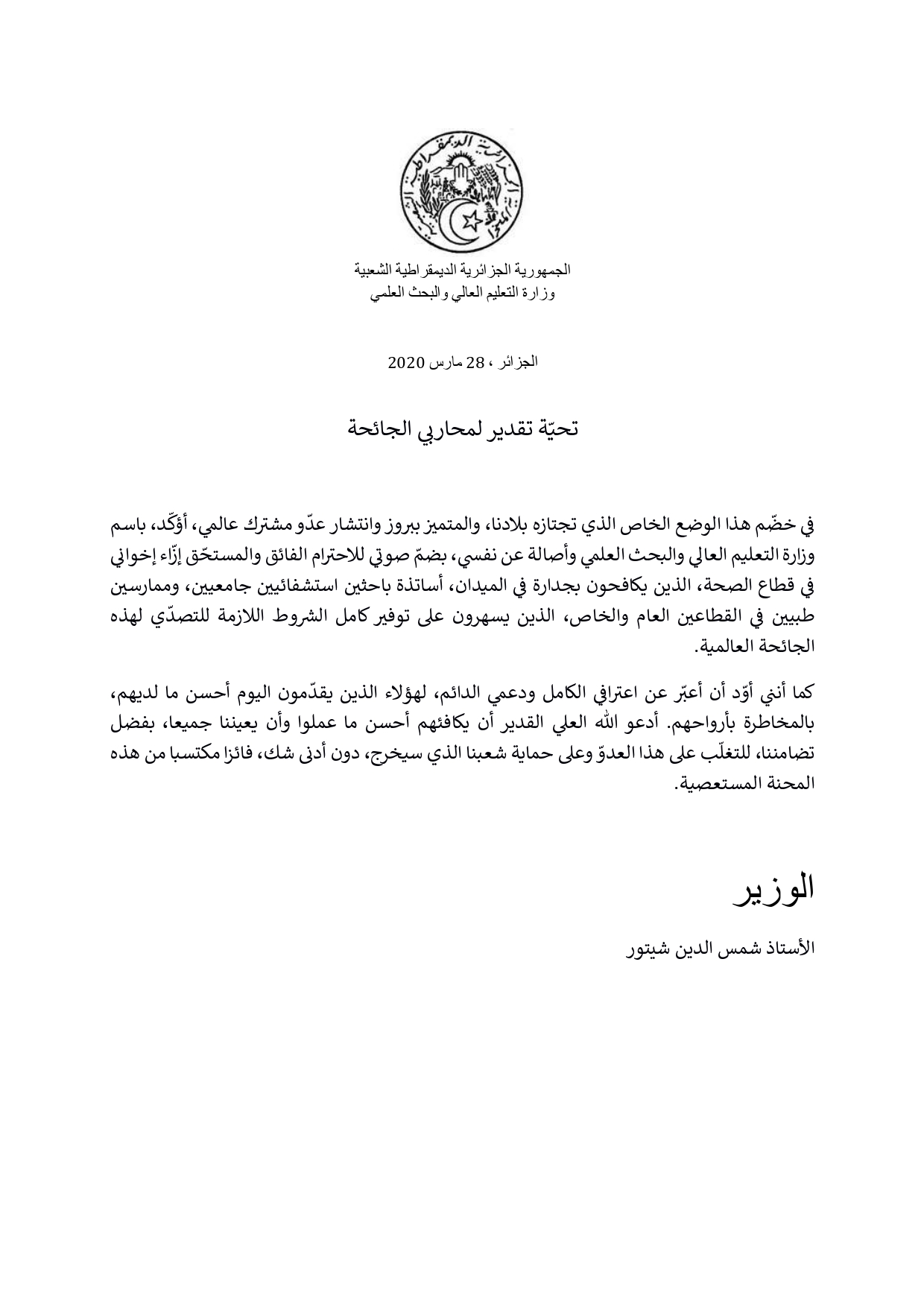
رسالة الوزير لكل الأستاذات و الأساتذة و الباحثين للتجنّد ووضع كل الموارد الفكرية والبحثية في مواجهة هذا الوباء

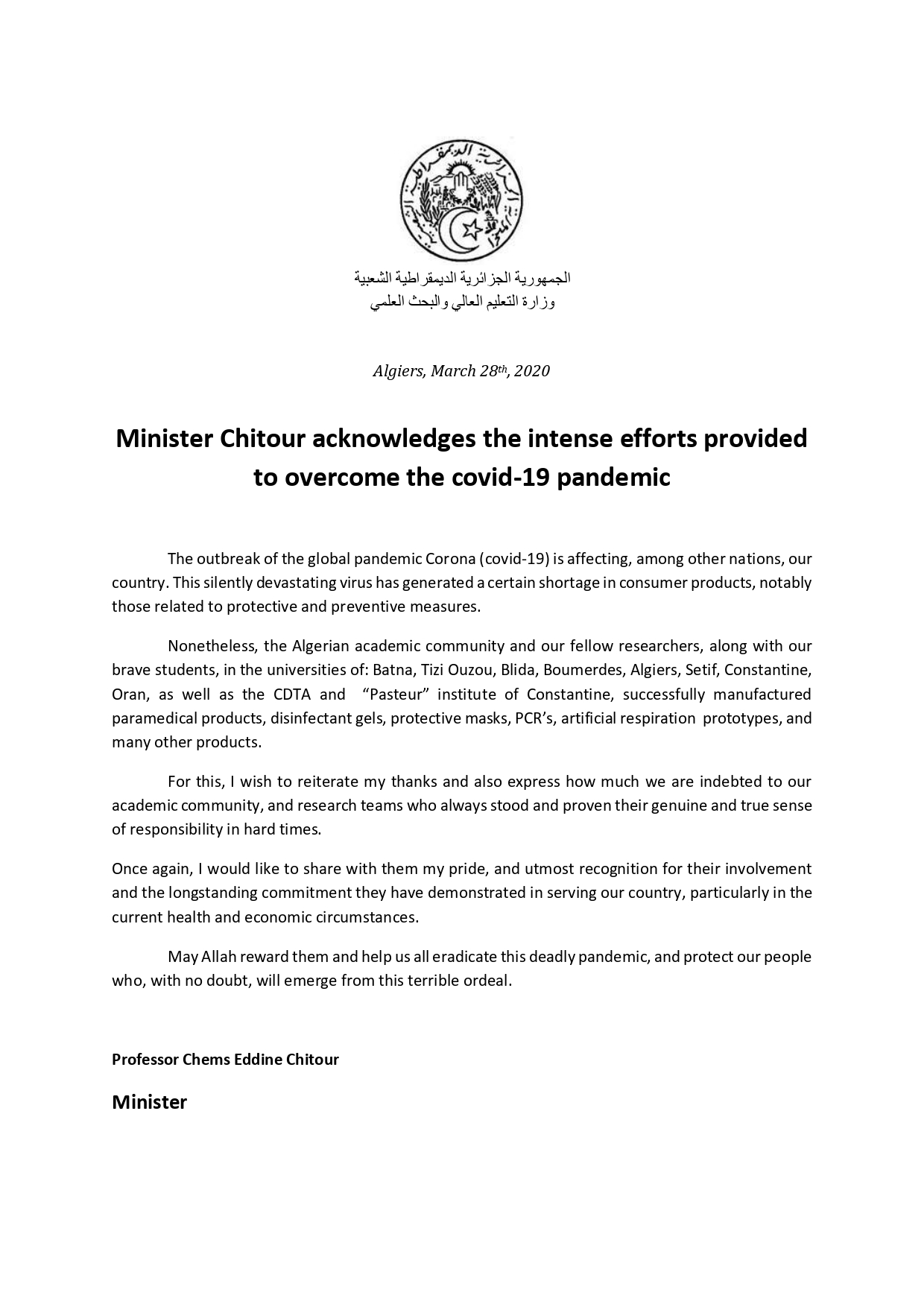
acknowledges the intense efforts provided to overcome the covid-19 pandemic
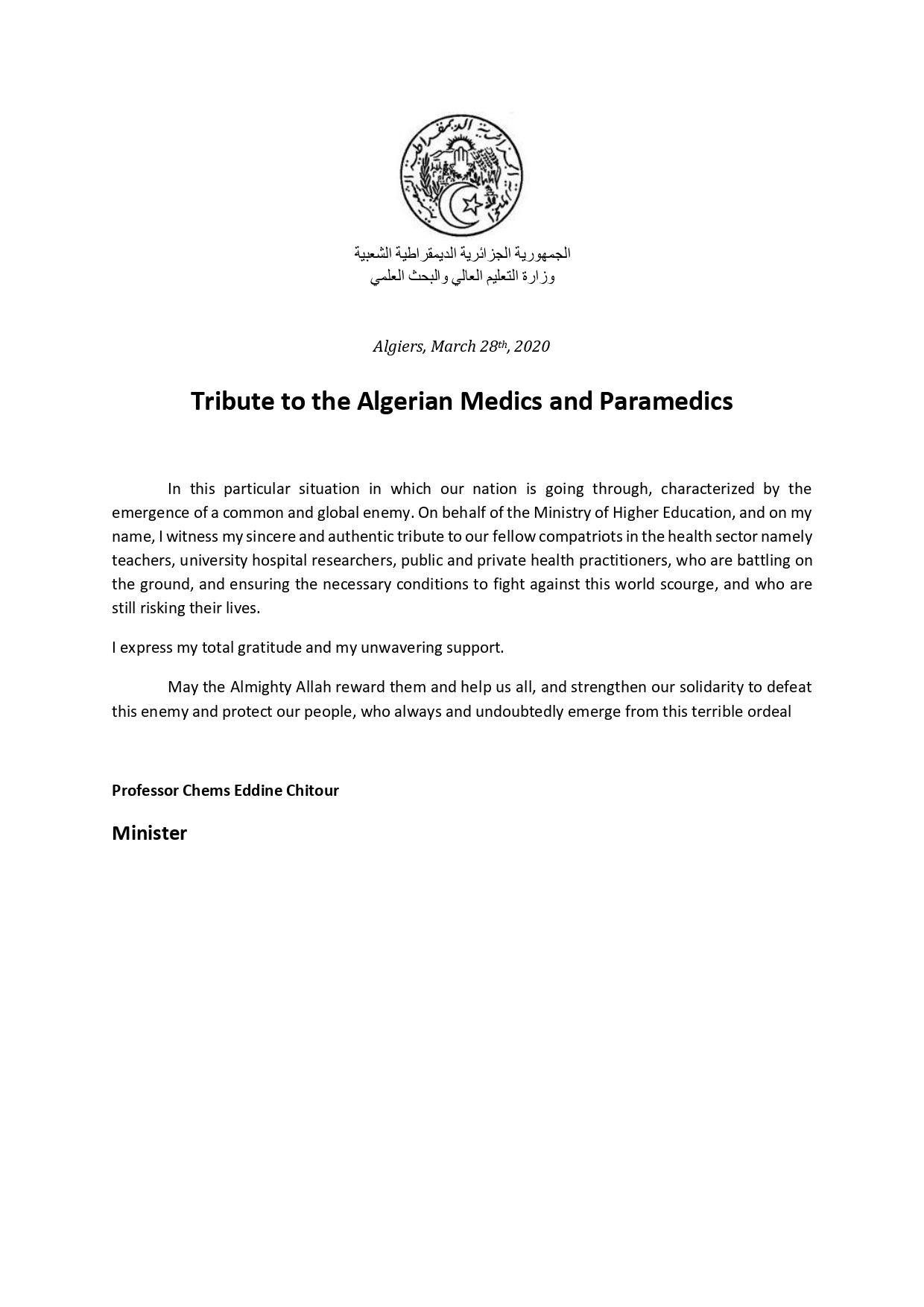
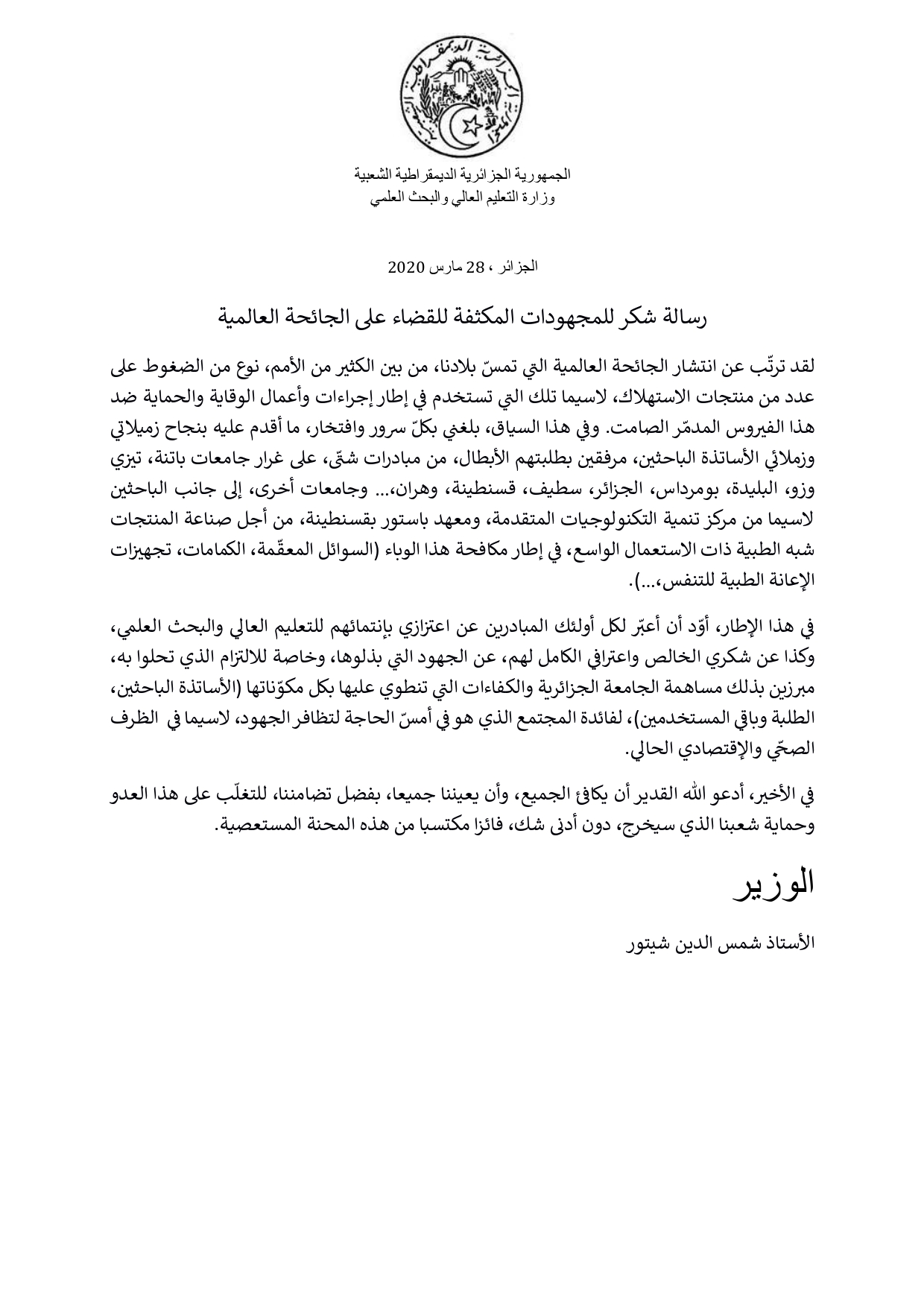
رسالة شكر للمجهودات المكثفة للقضاء على الجائحة العالمية
حول فَيروس كورونا المُستجِدّ
***– تقريرحول بعض المبادرات التي قامت بها جامعة قاصدي مرباح – ورقلة ***
*** انشاء المجموعة الخاصة بالوقاية من فيروس كورونا التابعة لجامعة قاصدي مرباح ورقلة ***
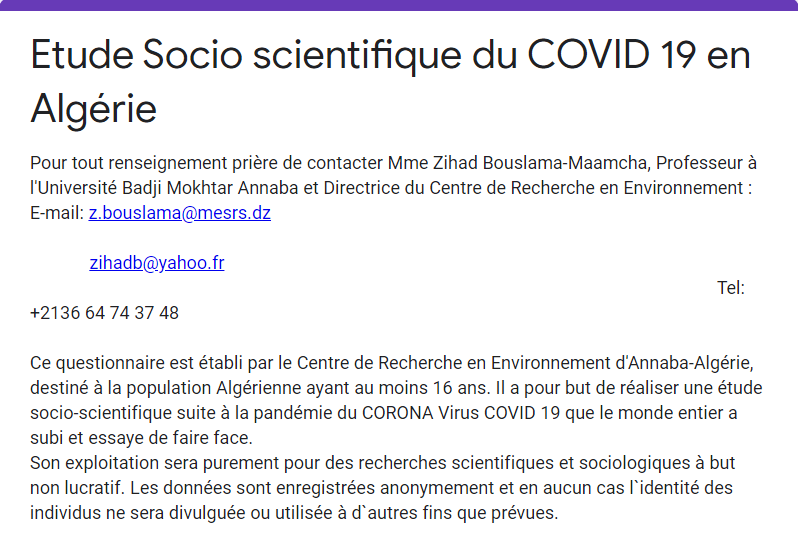
Etude socio scientifique du CORONA Covid19 en Algeria Sur le lien suivant :
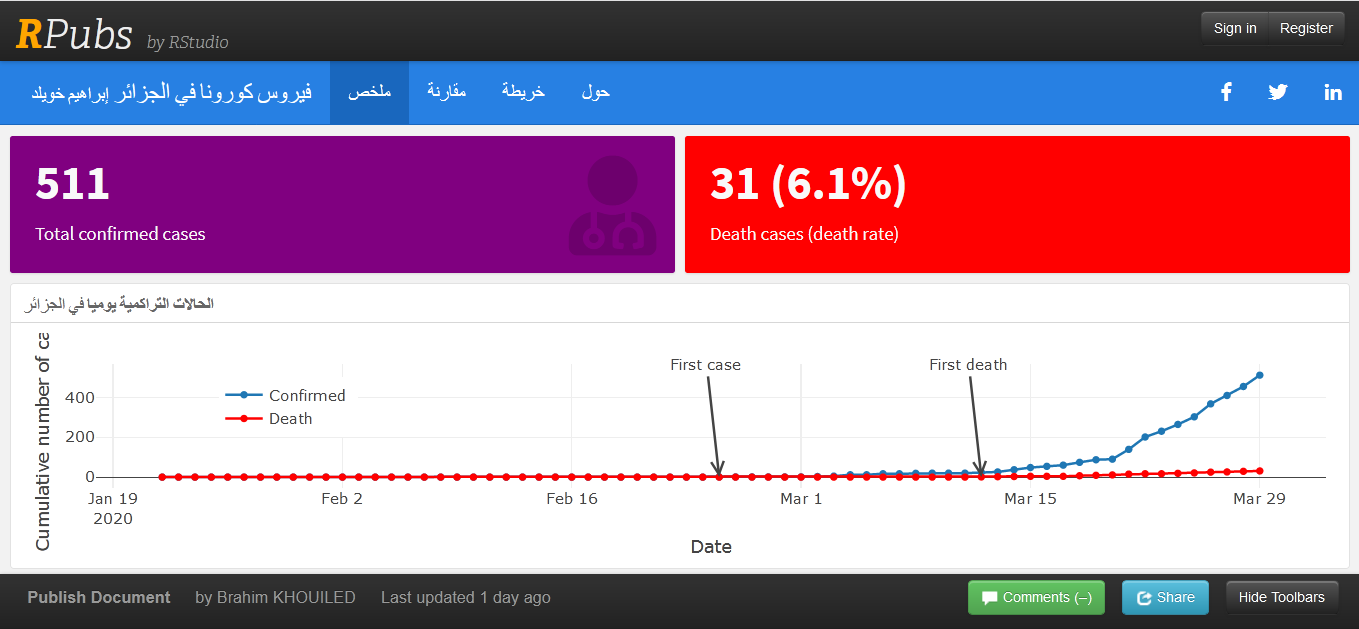
لوحة القيادة هذه تقدم نظرة عامة حول انتشار فيروس كورونا في الجزائر وباقي دول العالم. مصممة باستخدام لغة البرمجة Rوإطار العمل R Markdown. تحديث المعطيات يتم بشكل دوري (ليس يوميا). لوحة القيادة وكل ما تعلق بها موجودة في :
https://rpubs.com/Brahim/Coronavirus_in_Algeria
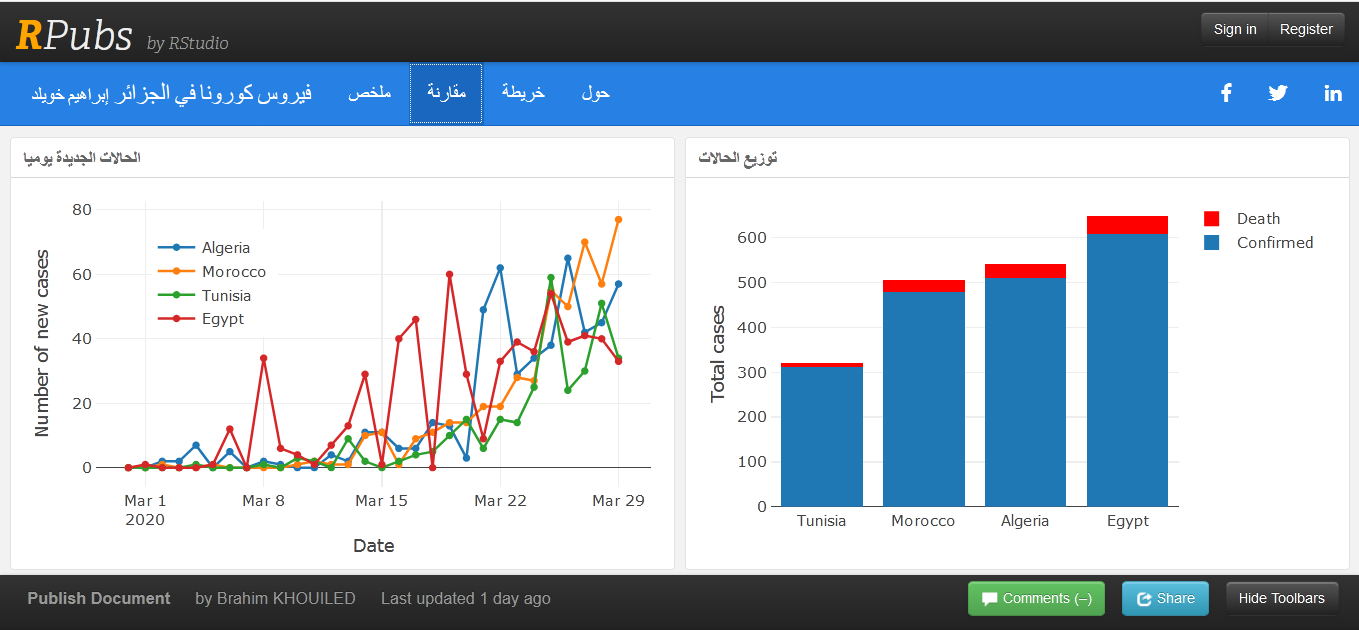
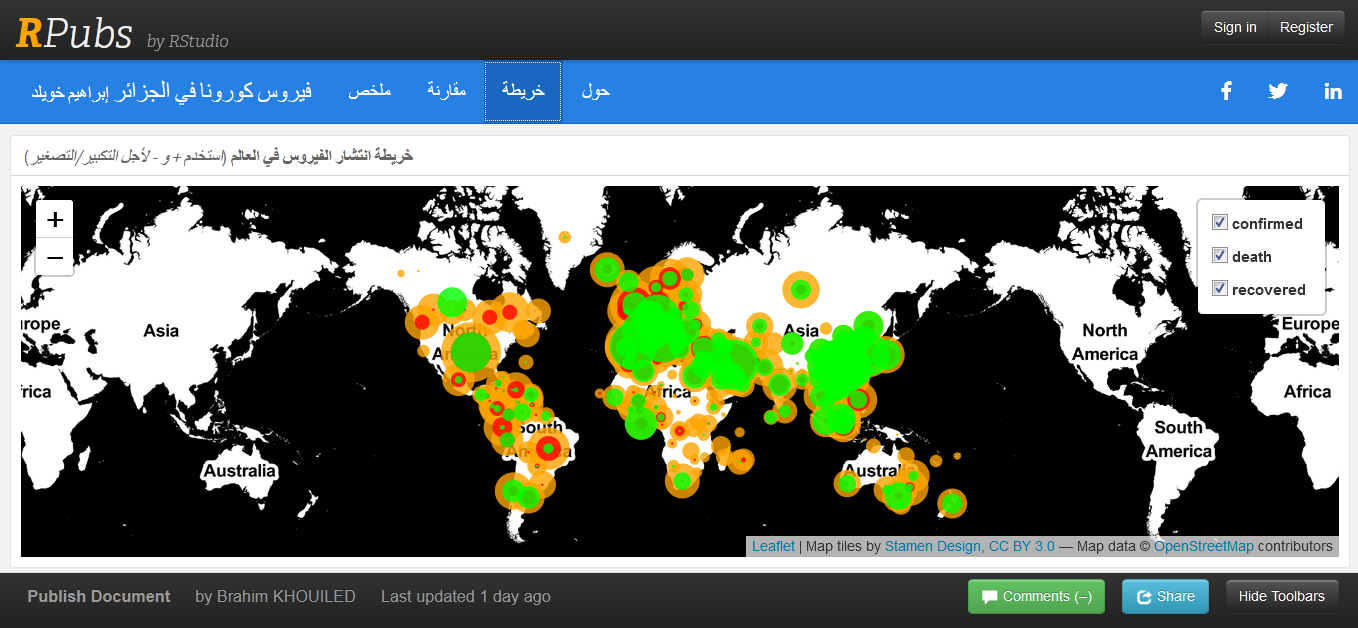
الشكل موصول للأستاذ إبراهيم خويلد باحث في الاقتصاد التطبيقي بكلية العلوم الاقتصادية والعلوم التجارية وعلوم التسيير بجامعة قاصدي مرباح بورقلة (الجزائر) وعضو في مخبر التطبيقات الكمية في العلوم الاقتصادية والمالية (AQSEF) بالجامعة.
صفحات حول إحصائيات فيروس كرونا في الجزائر
...من هنا
أسئلة حول طرق الوقاية من فيروس كورونا
...من هنا
دليل الوقاية من فيروس كورونا المستجد
دعوة لحضور ندوة بمناسبة إفتتاح مركز المساعدة النفسية الجامعية

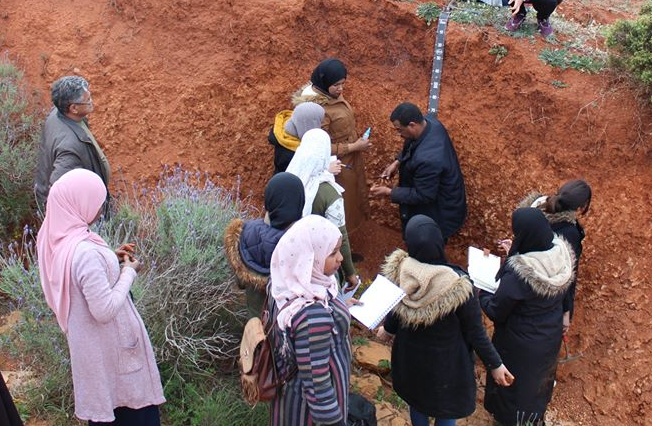
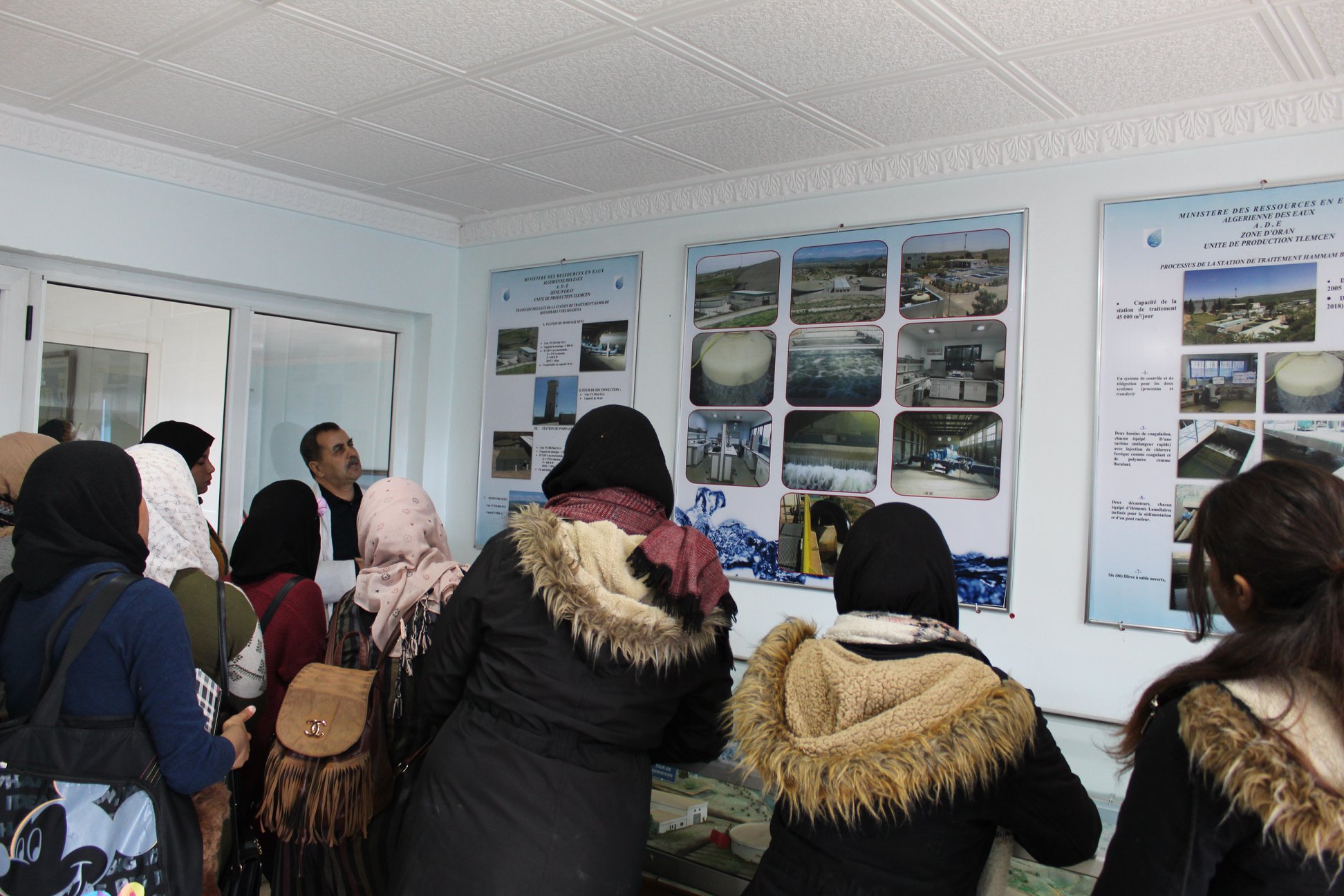
الخرجات العلمية الجماعية للموسم الجامعي 2019/2020 الخاصة بكلية العلوم الطبيعة والحياة قسم العلوم البيولوجية
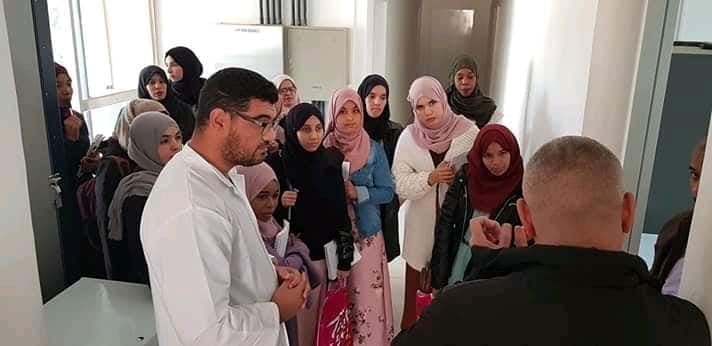
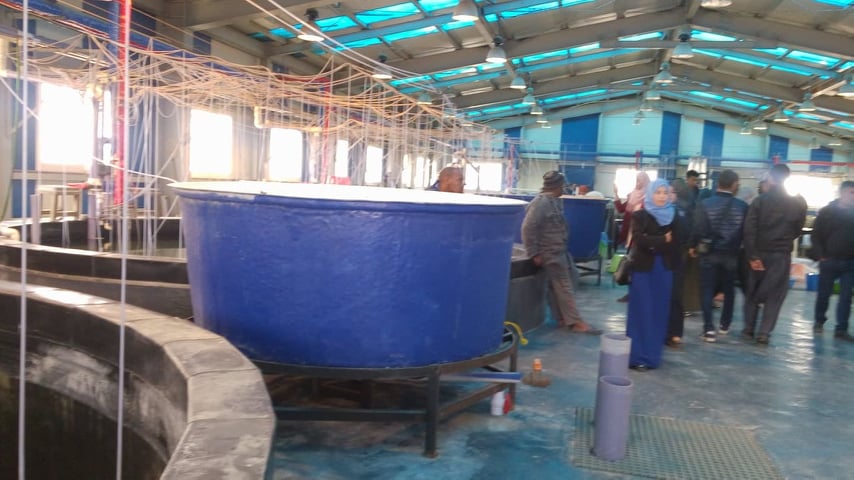
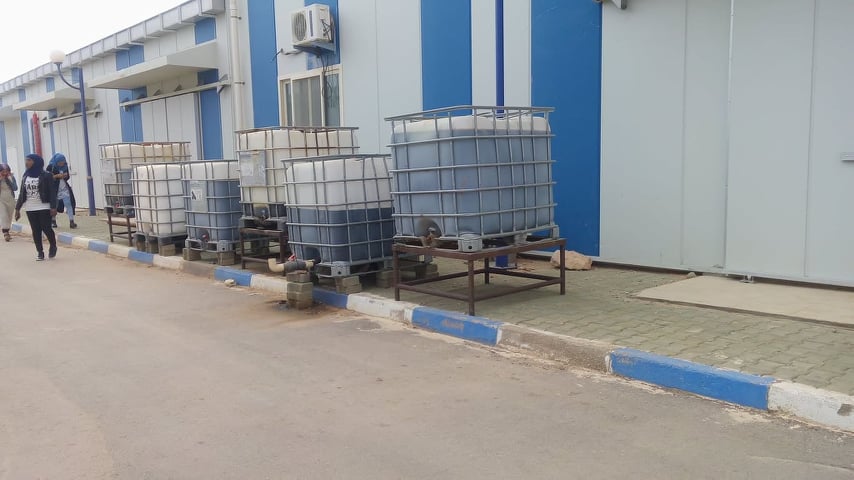
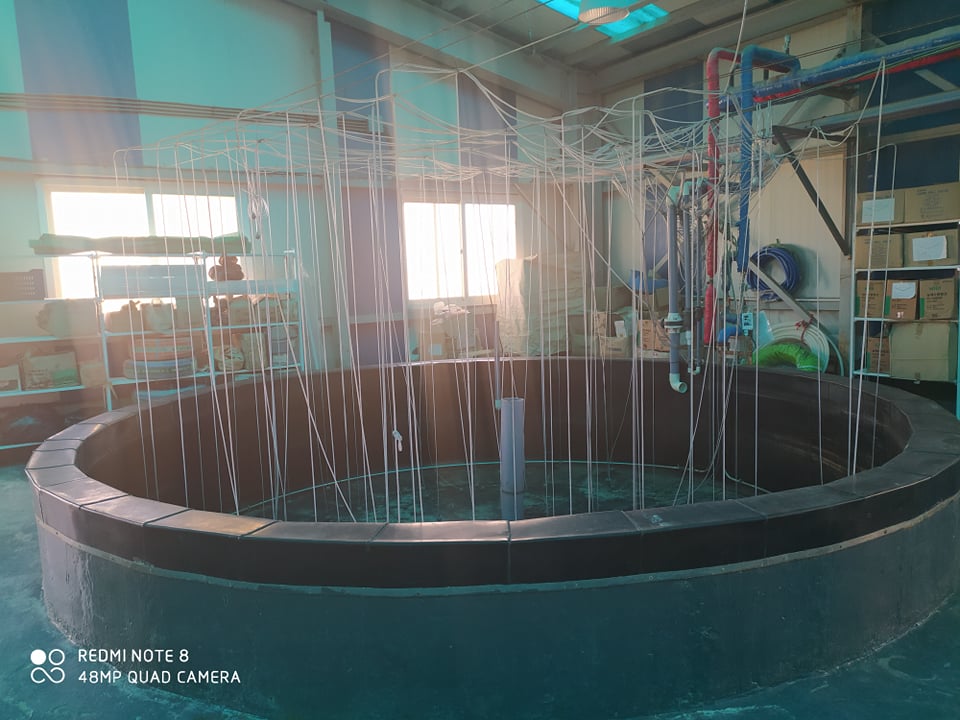
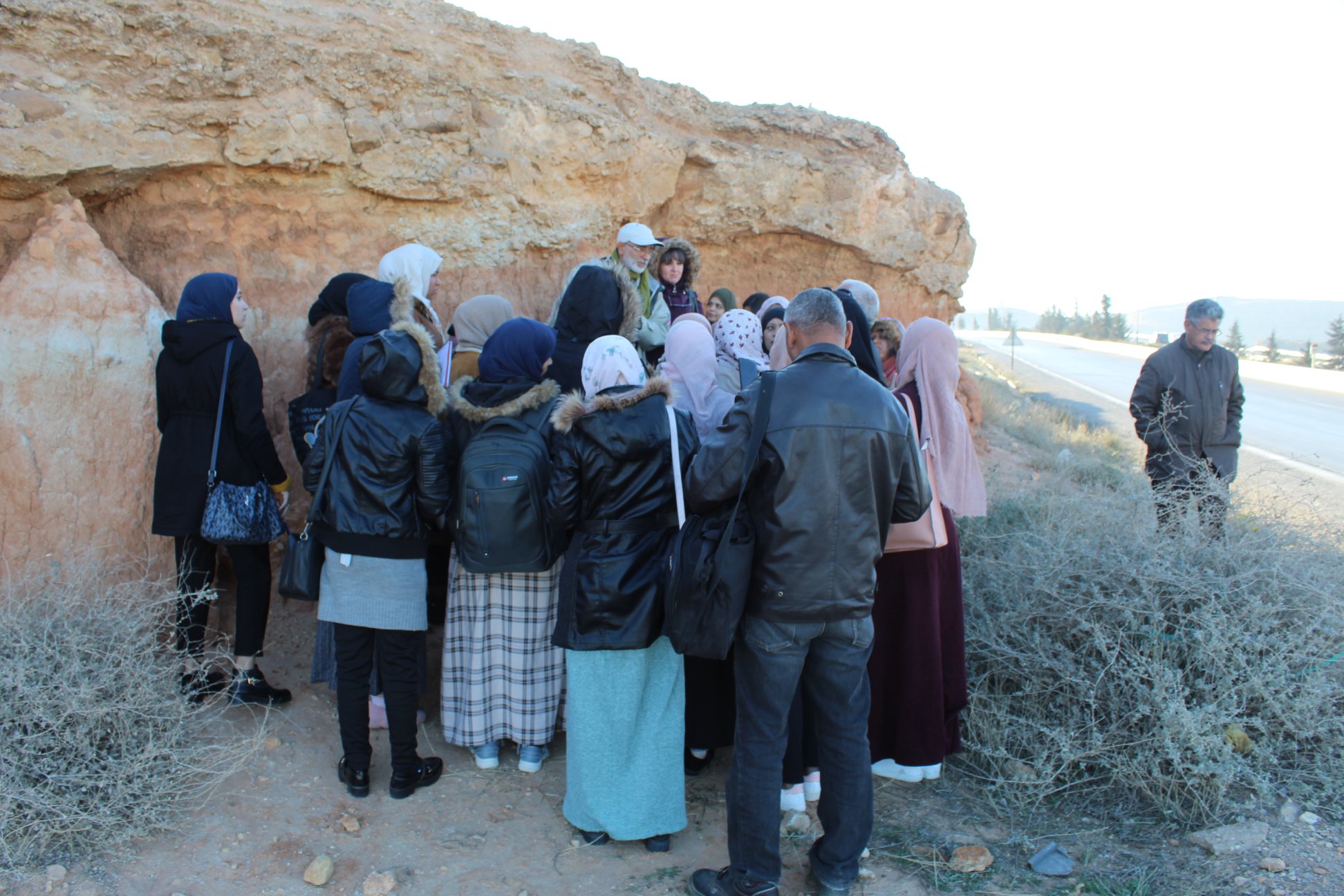
جانب من التربص العلمي الذي نظم لفائدة طلبة قسم العلوم الزراعية للسداسي الأول 2020/2019 مع بعض من الصور للمناسبة
More...


Coronaviruses (Cpv):
Coronaviruses (Cpv) are viruses from the coronaviridae family, the particularity of which is that they have a very long
RNA genome (ribonucleic acid allows the transport of the genetic message and the synthesis of proteins). These germs
are surrounded by a crown-shaped protein capsule, hence their name.
* Are they dangerous to humans?
Coronaviruses can be responsible for several respiratory and digestive diseases in several mammals.
In humans, these infections can be:
- Asymptomatic;
- Responsible for benign pathologies such as a cold or flu syndromes;
- Responsible for respiratory complications such as pneumonia in immunocompromised patients or infants;
- Responsible for severe respiratory syndrome, leading to epidemics.
* How to protect yourself?
The main recommendations, for the moment, mainly concern people who travel to areas affected by the virus.
It is necessary :
- Avoid contact with animals, living or dead;
- Avoid going to markets where live or dead animals are sold
- Avoid close contact with people suffering from acute respiratory infection;
- Do not eat uncooked or undercooked meat;
- Wash your hands regularly with soapy water or with alcohol-based solutions;
* Should we wear a mask?
According to the Ministry of Health, wearing a surgical mask is recommended only for people who show symptoms
of the disease to avoid spreading it by air. On the other hand, for people who are not sick, it is "not recommended
and its effectiveness has not been demonstrated".
* What to do in case of suspected cases?
For people who have stayed in China recently and have symptoms of respiratory infection with fever,
it is imperative to:
- Do not go to your doctor or the emergency room to avoid infecting others.
- Wear a surgical mask when in contact with other people.
- Use disposable tissues
- Wash your hands regularly.
The link from the Ministry of Health: www.santé.gov.dz to inform and educate the university community on the new Coronavirus.
Sensibilisation et Information sur le nouveau Coronavirus
Les Coronavirus (Cpv) sont des virus issus de la famille des coronaviridae, dont la particularité est de posséder un génome à ARN très long (l’acide ribonucléique permet le transport du message génétique et la synthèse des protéines). Ces germes sont entourés d’une capsule de protéines en forme de couronne, d’où leur nom.
Sont-ils dangereux pour l’humain ?
Les coronavirus peuvent être responsables de plusieurs maladies respiratoires et digestives chez plusieurs mammifères. Chez l’humain, ces infections peuvent être :
- Asymptomatiques ;
- Responsables de pathologies bénignes comme un rhume ou des syndromes grippaux ;
- Responsables de complications respiratoires telles que la pneumonie chez les patients immunodéprimés ou les nourrissons ;
- Responsables de syndrome respiratoire grave, entraînant des épidémies.
Comment se protéger ?
Les principales recommandations concernent, pour l’instant, principalement les personnes qui partent en voyage dans les zones touchées par le virus. Il faut :
- Eviter tout contact avec des animaux, vivants ou morts;
- Eviter de se rendre sur les marchés où sont vendus des animaux vivants ou morts
- Eviter tout contact rapproché avec des personnes souffrant d’infection respiratoire aigüe;
- Ne pas manger de viande non ou peu cuite;
- Se laver régulièrement les mains avec de l’eau savonneuse ou avec des solutions hydro-alcooliques;
- Faut-il porter un masque ?
Selon le Ministère de la Santé, le port du masque chirurgical est recommandé uniquement pour les personnes qui présentent des symptômes de la maladie pour éviter de la diffuser par voie aérienne. En revanche, pour les personnes qui ne sont pas malades, il n’est "pas recommandé et son efficacité n’est pas démontrée".
Que faire en cas de suspicion de cas ?
Pour les personnes ayant séjourné en Chine récemment et présentant des symptômes d’infection respiratoires avec de la fièvre, il est impératif de :
- Ne pas se rendre chez son médecin traitant ou aux urgences pour éviter de contaminer les autres.
- Porter un masques chirurgical, en cas de contact avec d’autres personnes.
- Utiliser des mouchoirs jetables
- Bien se laver les mains régulièrement.
Liens du Ministère de la santé :
http://www.sante.gov.dz/coronavirus/coronavirus-2019.html
au vue d’informer et de sensibiliser la communauté universitaire sur le nouveau Coronavirus.